Culture and everyday differences in China
Last verified 9 October 2026 against official sources.
Quick answer
Most surprises are practical rather than cultural: you need your passport for trains, hotels and many attractions; payments are by phone; big sights need booking in advance; and national holidays are very crowded. Socially, people are generally helpful to visitors, tipping isn't expected, and shared dishes are the norm.
Every country has its own habits. This page describes what tends to be different for first-time visitors, without judging it. Big cities like Shanghai and Shenzhen feel more international; smaller cities and rural areas less so.
Practical differences
- Your passport is your ID everywhere. Train tickets, hotels, many museums and major attractions are booked in your real name. Carry your passport every day.
- Book big sights in advance. Popular sites such as the Forbidden City and many national museums sell a limited number of timed tickets online, often days ahead, using your passport number. Many museums close one day a week, often Monday.
- Phones do almost everything. Payments, metro rides, taxis and restaurant ordering by QR code. See how to pay in China.
- One time zone. All of China uses Beijing time (UTC+8), so in the far west the sun rises and sets late.
- Tap water isn't usually drunk straight from the tap. Hotels provide kettles or bottled water, and restaurants often serve warm or hot water.
- Toilets: public toilets are common and free in cities. Squat toilets are still frequent outside hotels and malls, and toilet paper isn't always provided — carry tissues.
- English is widely used on signs, in metros and at airports, but less common in conversation outside hotels and big tourist sites. A translation app and our show-the-driver cards help.
Crowds and holidays
Domestic tourism is huge. During national holidays, trains sell out, hotel prices rise and famous sights are extremely busy:
- Chinese New Year (Spring Festival) — late January or February; the week around it is the biggest travel period of the year. Some small shops and restaurants close for several days.
- May Day holiday — around 1–5 May.
- National Day “Golden Week” — 1–7 October.
If you can, plan around these dates or book trains and hotels early. Weekends are also busier at major sights.
Eating out
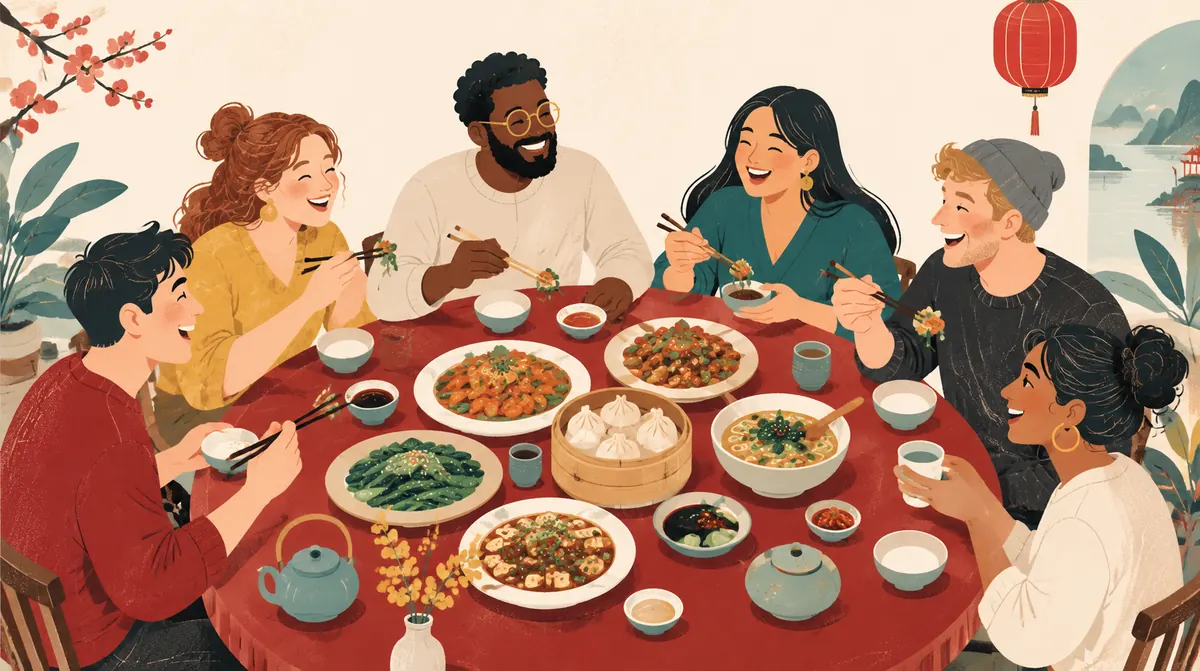
- Dishes are usually shared: everyone orders for the table and takes from the middle.
- Among friends, the host often pays for everyone; offering to pay is polite, and splitting the bill is increasingly common among younger people.
- Tipping isn't expected in restaurants, taxis or hotels. Some upmarket restaurants add a service charge.
- Don't stand chopsticks upright in a bowl of rice — it resembles incense at a funeral.
- Restaurants are often lively and loud; that's normal and seen as a sign of a good atmosphere.
Social habits
- Questions about age, marriage, children or salary can come up early in conversation. They're usually friendly curiosity; you can answer vaguely.
- Face: people tend to avoid open disagreement or embarrassing someone in public. A vague answer (“maybe”, “we'll see”) can mean no.
- Attention: in smaller cities, visitors may get looks or requests for a photo. It's curiosity; saying no politely is fine.
- Personal space in very busy places is smaller than many visitors are used to, and queues can be less orderly at peak times.
- Smoking is banned indoors in public places in many big cities, but you'll still see it in some places.
- Gifts: offer and receive things — including business cards — with both hands. Clocks are avoided as gifts, and the number 4 sounds like the word for death, while 8 is considered lucky.
Respect and rules
- At temples, dress modestly, follow signs about photography, and don't touch statues or offerings.
- Don't photograph military or security sites; some museums and temples don't allow photos inside.
- Ask before photographing people up close, especially in rural areas.
- As in many countries, political topics are best avoided with people you've just met.
Safety
- Big cities are generally safe to walk around, including at night. Watch for pickpockets in crowded places and on trains.
- A known scam in tourist areas: friendly strangers who invite you to a tea tasting, bar or art show that ends with a very large bill. Politely decline.
- Emergency numbers: police 110, ambulance 120, fire 119.
FAQ
Do you tip in China?
No, tipping isn't expected in restaurants, taxis or hotels. Some upmarket restaurants add a service charge to the bill.
Do I need to book attractions in China in advance?
For major sights and many museums, yes. They sell limited timed tickets online, often days ahead, using your passport number.
When is the worst time to travel in China?
During national holidays: Chinese New Year (late January or February), the May Day holiday (around 1–5 May) and National Day Golden Week (1–7 October).
Can I drink tap water in China?
It isn't usually drunk straight from the tap. Use bottled or boiled water; hotels provide kettles or bottles.